Block's research lab trained Dessa from scratch on conversational audio, with no text and no pretrained models. It listens while it talks, backchannels and laughs, and runs faster than real time on an M4 Max MacBook Pro. For now, access is limited to a small group of safety researchers.
BottleCap AI retrained gemma-4-26B-A4B-it to reach its answers with less thinking. Across twelve benchmarks it averaged 38.9% fewer reasoning tokens, and up to 69.1% fewer, for a 0.15-point accuracy cost. It is a drop-in replacement on Hugging Face with GGUF builds, a cheap latency win for local agents.
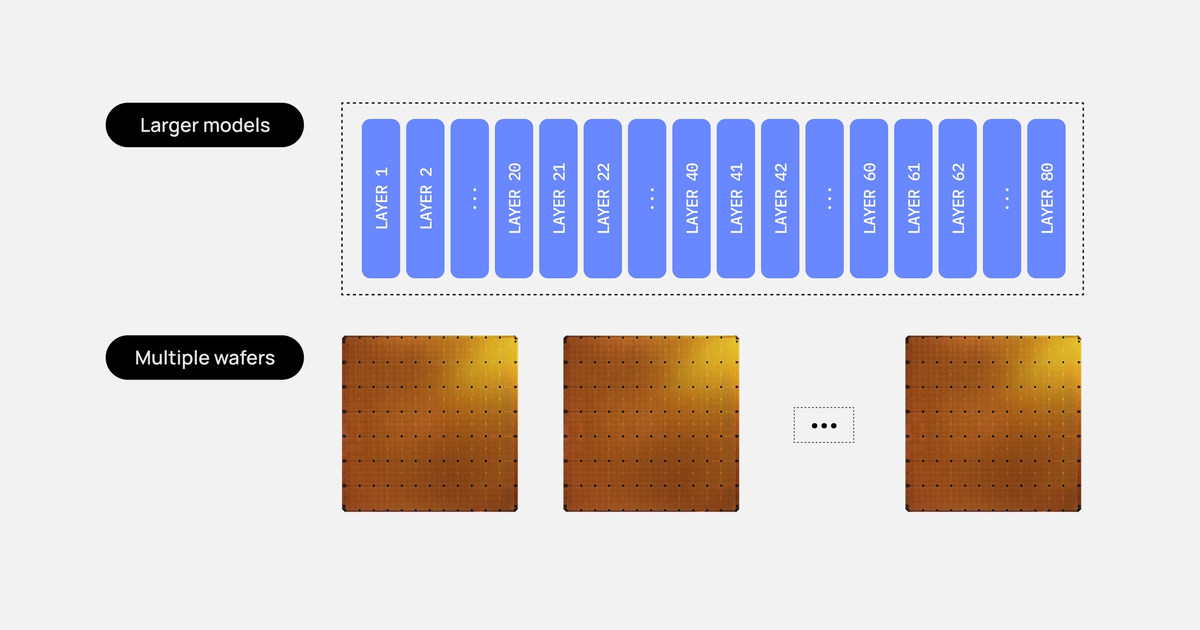
Cerebras explains how it splits Kimi K3's 4-bit weights layer by layer across WSE-3T wafers and pipelines concurrent requests so that only activations move between them. It claims 1,000 to 2,000+ tokens per second, and argues that tokens per second per megawatt is the number to watch.
Dream Labs calls Dream-1 a World Action Model. It controls bimanual robots it was never trained on, and the company says it was tested zero-shot on 27 simulated and 4 real robots. It costs $3 an hour, or $2 for the flash variant, and is labelled a research beta that is not validated for safety-critical use.
uv 0.12.3 and ty 0.0.76 add a preview integration. ty type-checks PEP 723 scripts in environments that uv prepares, and uv check runs the ty version pinned in your lockfile against the project. One command for deps plus types is the kind of tight loop coding agents do well with.
Corgi keeps agents and long-running processes alive in the background on macOS, Linux and WSL, and is aimed squarely at people juggling several coding agents at once. It drew a lively Show HN thread.
The release updates the embedded Chromium from 127 to 150, moves first-party plugins into a core folder with a new third-party layout (legacy paths keep working until 34.0), improves source snapping and enables NVENC on Arm64.